Why Your Community Emergency Plan Doesn't Need to Take Six Months to Write
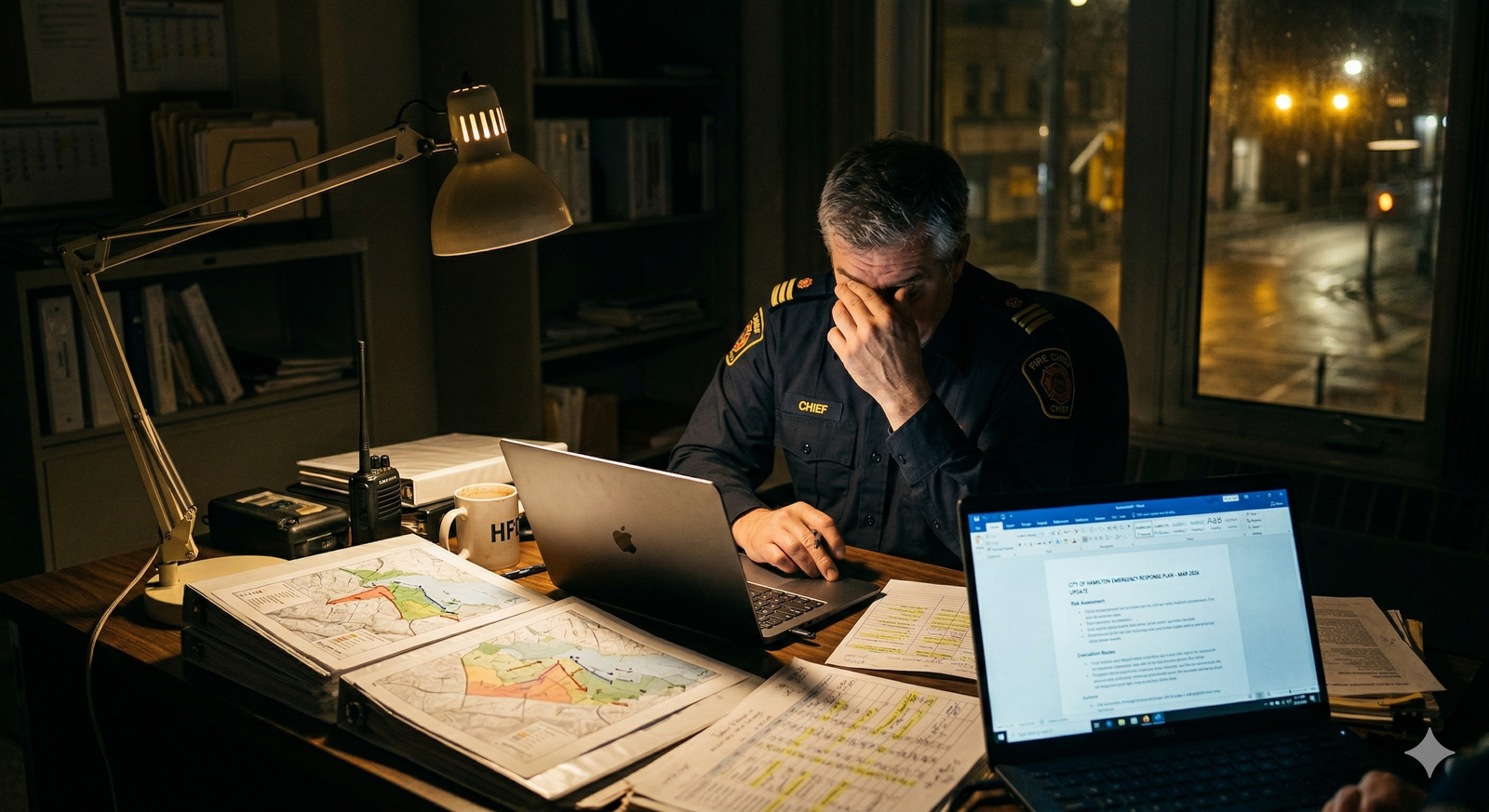
Most provinces require a community emergency plan. It's the law. But here's what actually happens: a small municipality or agency gets the mandate, realizes they need to coordinate with health, police, public works, utilities, and social services, and suddenly a project that "shouldn't take that long" turns into a year of meetings that nobody can attend because everyone's already doing three jobs. Some communities give up entirely. Many Canadian municipalities have no current emergency plan at all, not because they don't care, but because the process feels impossible without hiring a consultant.
The problem isn't complexity itself. It's that the process treats emergency planning like a writing assignment when it should be a conversation.
Why Existing Approaches Fall Short
Generic emergency planning templates don't know your community. They miss local vulnerabilities, don't reflect your actual resources, and often reference standards or procedures that don't apply to you. When you do hire a consultant, you're paying someone to run meetings and write down what you already know, then hand you a 200-page document that gathers dust. When you try to update it two years later, you have no idea who owns which sections, what's actually current, and what's changed since it was written.
Manual processes also assume you have dedicated planning staff. Most agencies don't. A small-town fire chief, an emergency manager wearing five hats, or a volunteer coordinator wearing two. None of these people have time to become expert planners. They know their community and their risks. They shouldn't need a certification to document that.
What It Looks Like in Practice
It's Tuesday morning, and an emergency manager for a rural municipality sets up a guided session in HazReady. Instead of staring at a blank page, she answers focused questions: What are your primary hazards? She knows this: flooding, industrial incident on the highway, power outage. Who needs to be involved? She lists the agencies. What's your geography and vulnerable population? She knows this too. Where are your resources? EMS, two fire stations, one small police detachment.
The system generates a draft community emergency plan grounded in provincial legislation and real-world scenario planning. It's not a one-size-fits-all template. It reflects her community's actual vulnerabilities and capacity. She reviews it with her emergency management committee in one session instead of six. They refine it. Two weeks later, they have an approved, legally sound plan that lives in a version-controlled system. When they need to update it next year, they don't start over. They modify the existing plan and track what changed and why.
No consultant. No six-month timeline. No gathering dust on a shelf.
What This Means for Your Agency
For the solo emergency manager or the fire chief juggling planning duties on top of operational command: this is time you get back. You're not paying for a planner to facilitate meetings you could run yourself. You're getting a structured process that mirrors best practices and legislation so you don't have to reinvent the wheel.
For larger agencies with dedicated planners: this accelerates your cycle and gives you a platform to manage multi-year updates without losing institutional knowledge.
For councils and boards: you have a documented, current plan that demonstrates due diligence and statutory compliance.
"Your community knows its own risks. A good emergency plan documents what you already know in a format that's legally sound and actually usable when something happens."
See HazReady on your jurisdiction
Every agency has its own procedures, hazards, and mutual aid picture. The quickest way to tell whether this fits yours is to see it working against your own material rather than a generic demo. Book a walkthrough for your agency.