NOW IN EARLY ACCESS
The Operating System for Emergency Response
Every responder, sensor, drone and robot on one live picture — and the only record of how response actually unfolds, human and machine together. HazReady supports every decision; your commanders make it.
THE PROBLEM
Your risk data, your plans and your people live in different worlds
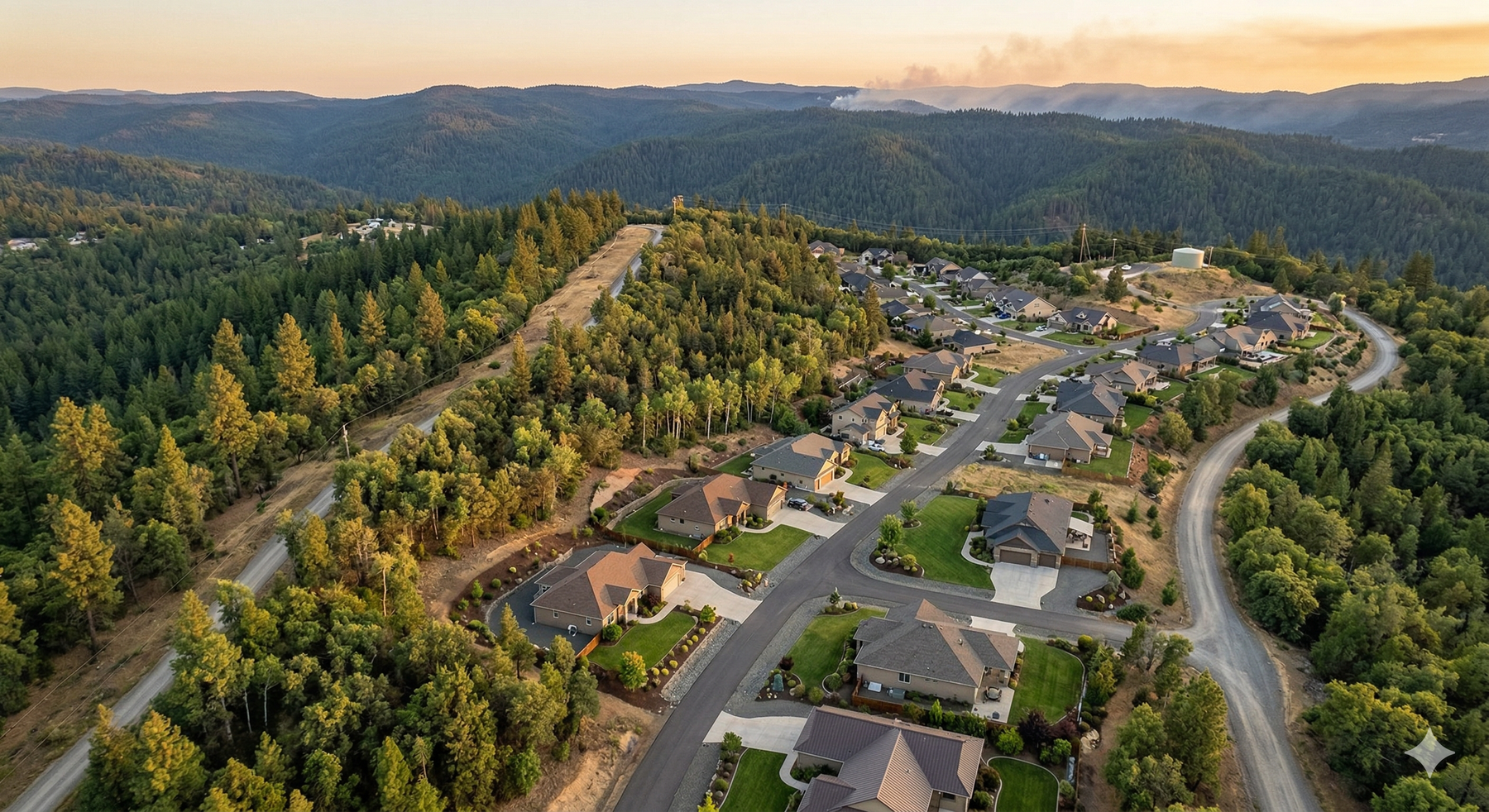
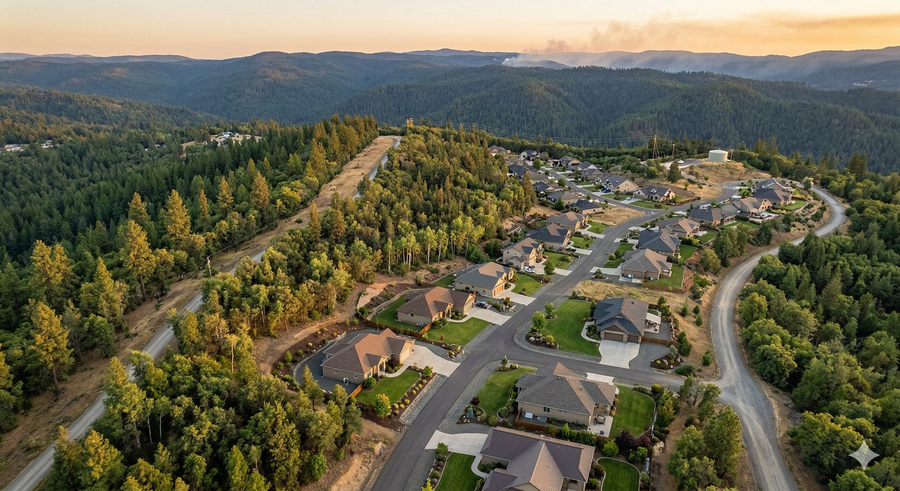
The HIRA is a spreadsheet. The emergency plan is a PDF nobody has opened since the last review. Critical infrastructure lives in a GIS nobody can access during an event. Accountability happens on a whiteboard. The expertise is on scene; the picture isn't. When something actually happens, none of it talks to each other — and the people who need it most are standing in the smoke. HazReady closes that gap.
WHAT HAZREADY DOES
Built for the whole incident — before, during and after
Not a generic records system with a public-safety skin. Every module below was designed around a real job in emergency preparedness and response — knowing your risks, readying your people and resources, running the incident on one live picture, and learning from what happened.
HIRA Registry
A living hazard identification and risk assessment with a defensible 5x5 matrix, scoring history and trend lines — not a spreadsheet that ages out. Tie every hazard to the infrastructure and populations it threatens.
See how it works ↗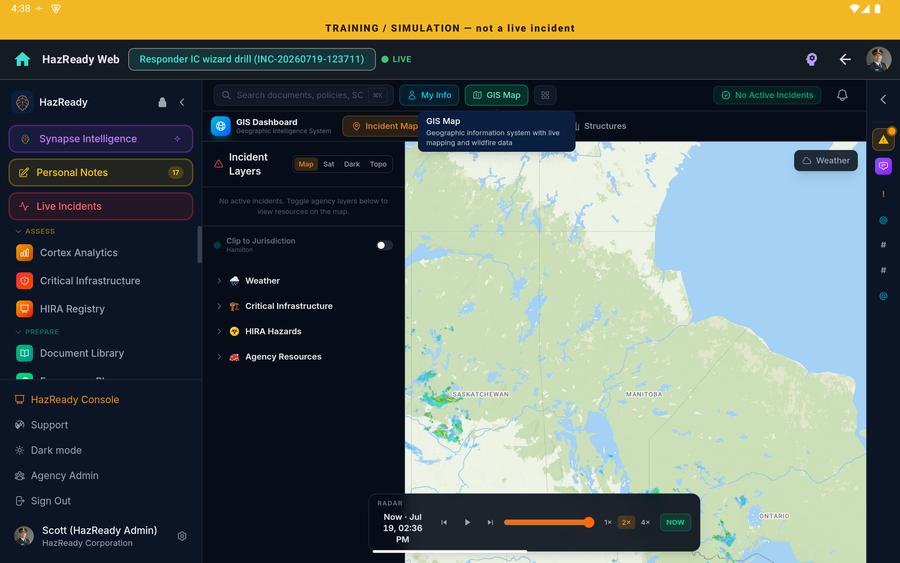
Critical Infrastructure
A structured CI registry with interdependency tracking, so you can answer the question that matters: if this asset fails, what else fails with it? AI-assisted discovery finds the hospitals, schools, rail lines and utilities in your jurisdiction with real addresses.
See how it works ↗
Emergency Plans
Community emergency plans, department SOGs, continuity and recovery plans — generated from your own jurisdiction data and reference library, then governed through review, approval and version control.
See how it works ↗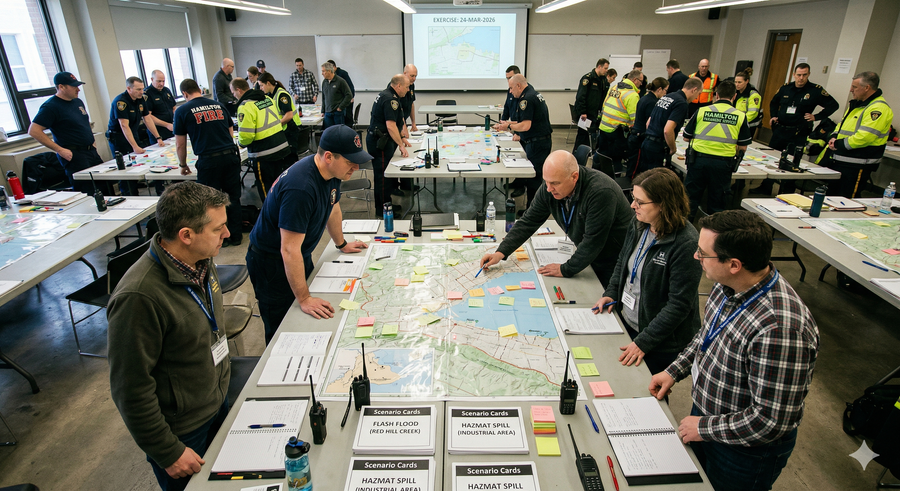
Exercise Builder
Design discussion-based and operations-based exercises with objectives, injects, MSEL, evaluation criteria and after-action reporting. Turn a real HIRA scenario into a full exercise package.
See how it works ↗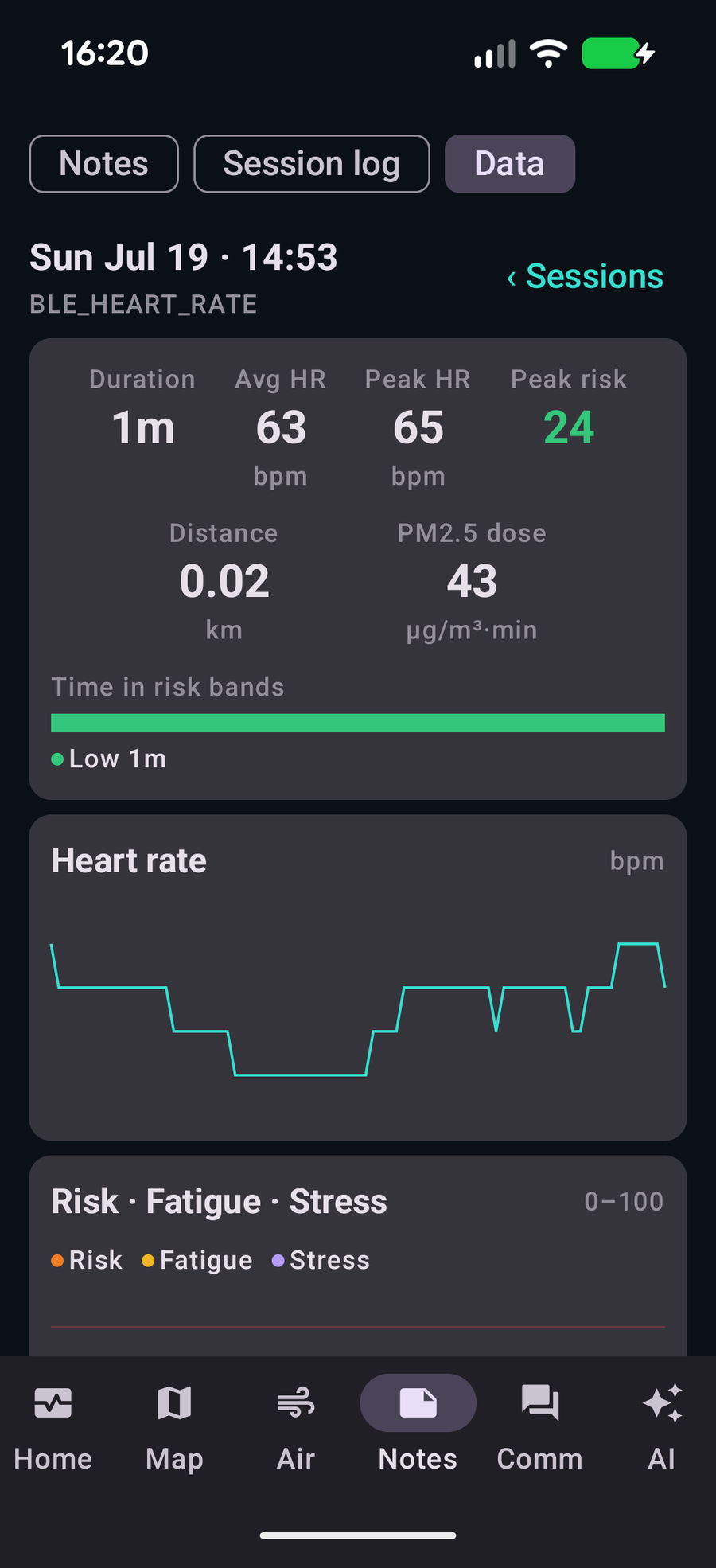
Responder Accountability
Know who is on scene, what task they hold, and when PAR is due — and, uniquely, how each responder is actually holding up. Live physiological status turns accountability from a headcount into a safety system.
See how it works ↗Common Operating Picture
One live map and one live board. Units, assignments, hazard zones, weather, wildfire and air quality layers on the same picture — so command, the EOC and the field are looking at the same truth.
See how it works ↗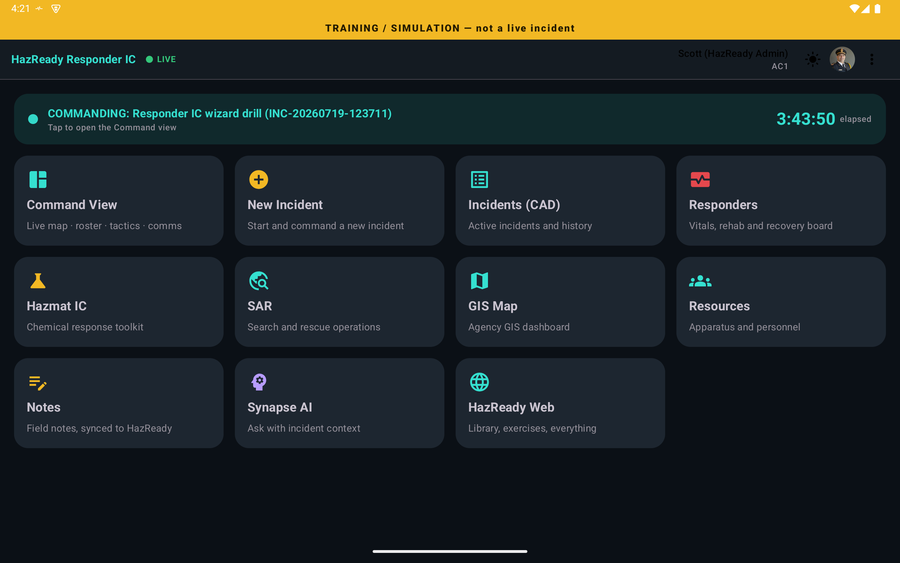
EOC Operations
Run the EOC on ICS structure with staffing capability tracking, position assignment, objectives, and an auditable event log that becomes your after-action record automatically.
See how it works ↗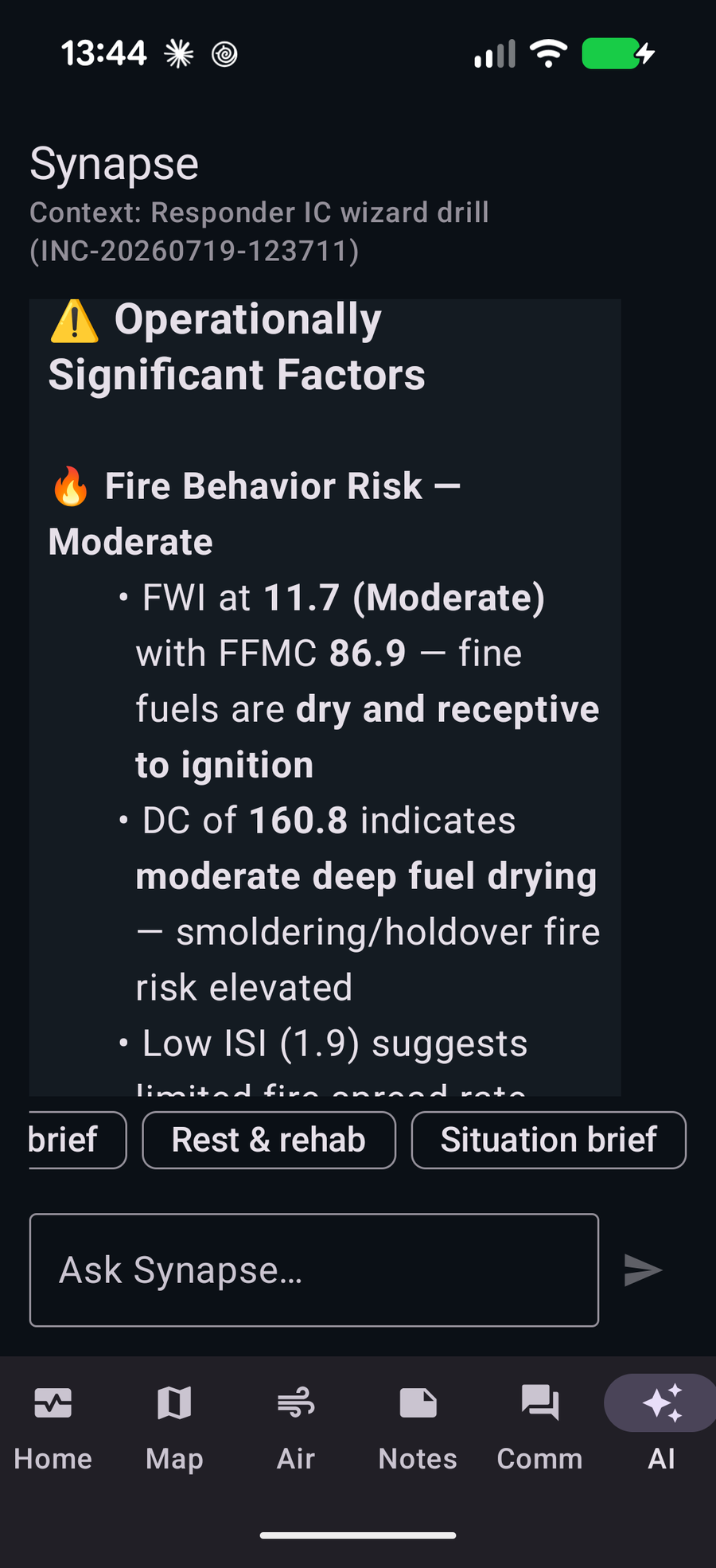
Decision Support
Context-aware guidance during an event — drawn from your SOGs, your plans, your hazard data and the ERG, with visible provenance so you always know what informed the recommendation.
See how it works ↗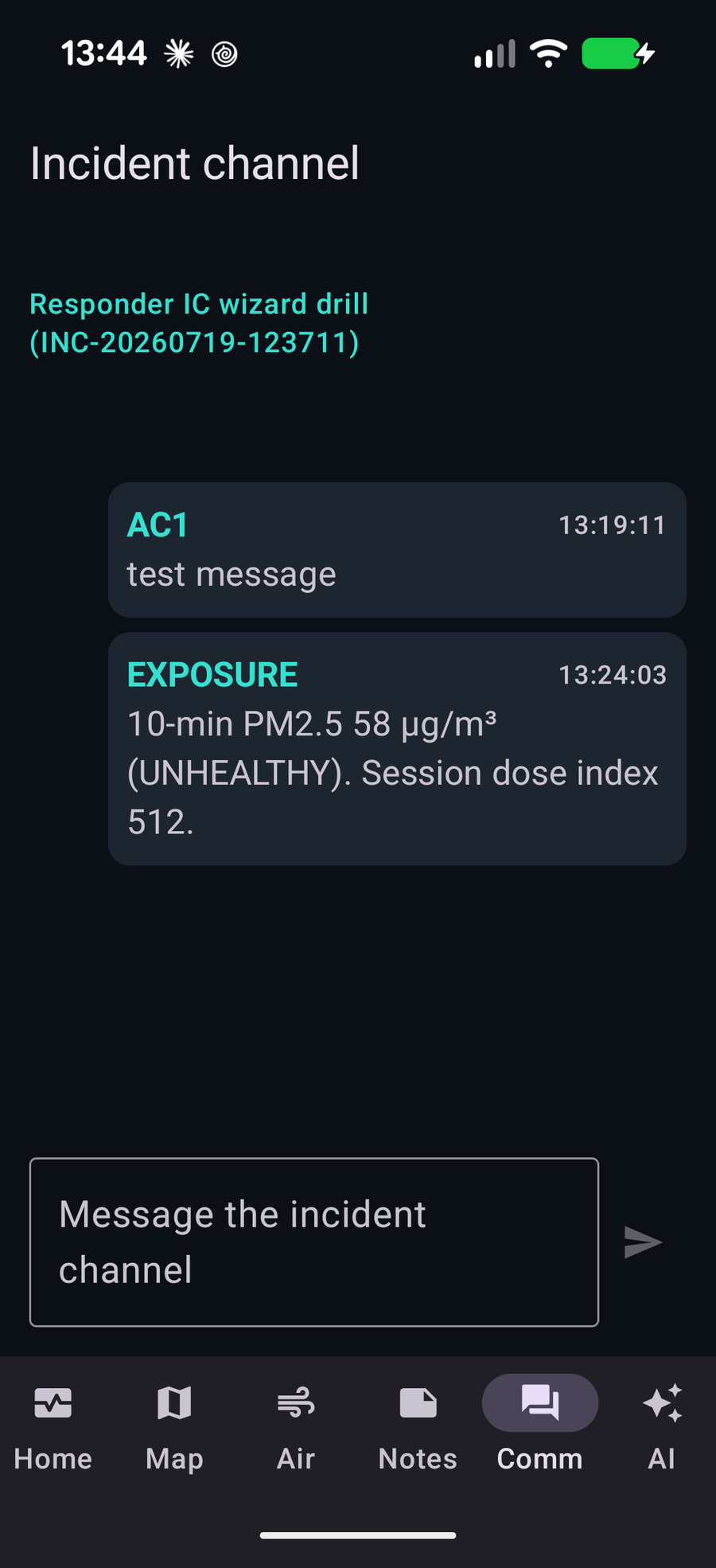
Plexus Communications
Secure interagency comms with something ordinary chat cannot do: send a photo from the field and get structured risk analysis back — damage scale, hazard indicators and recommended actions.
See how it works ↗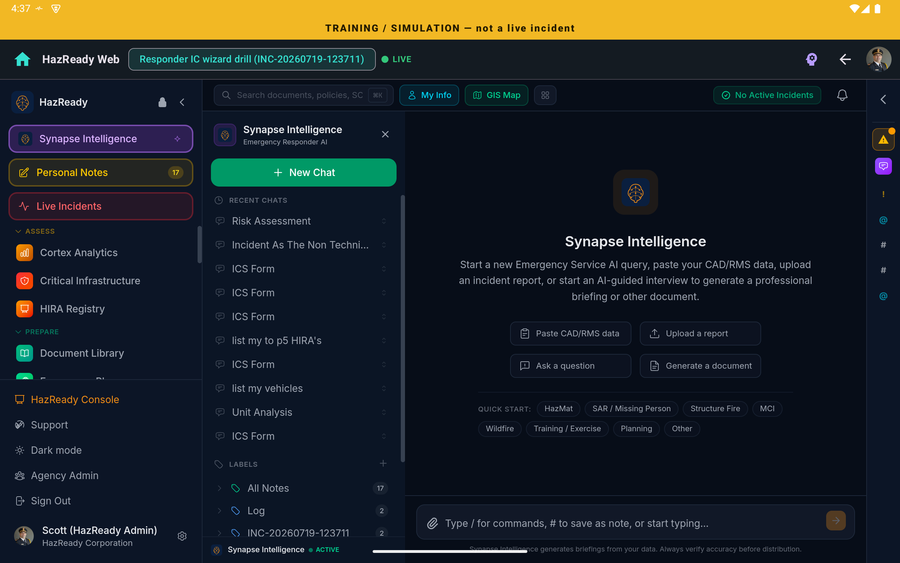
Synapse Intelligence
Your agency's own secure AI brain. It drafts the plans, briefings and reports that used to eat a shift — grounded in your own procedures, showing its sources, and always proposing rather than deciding.
See how it works ↗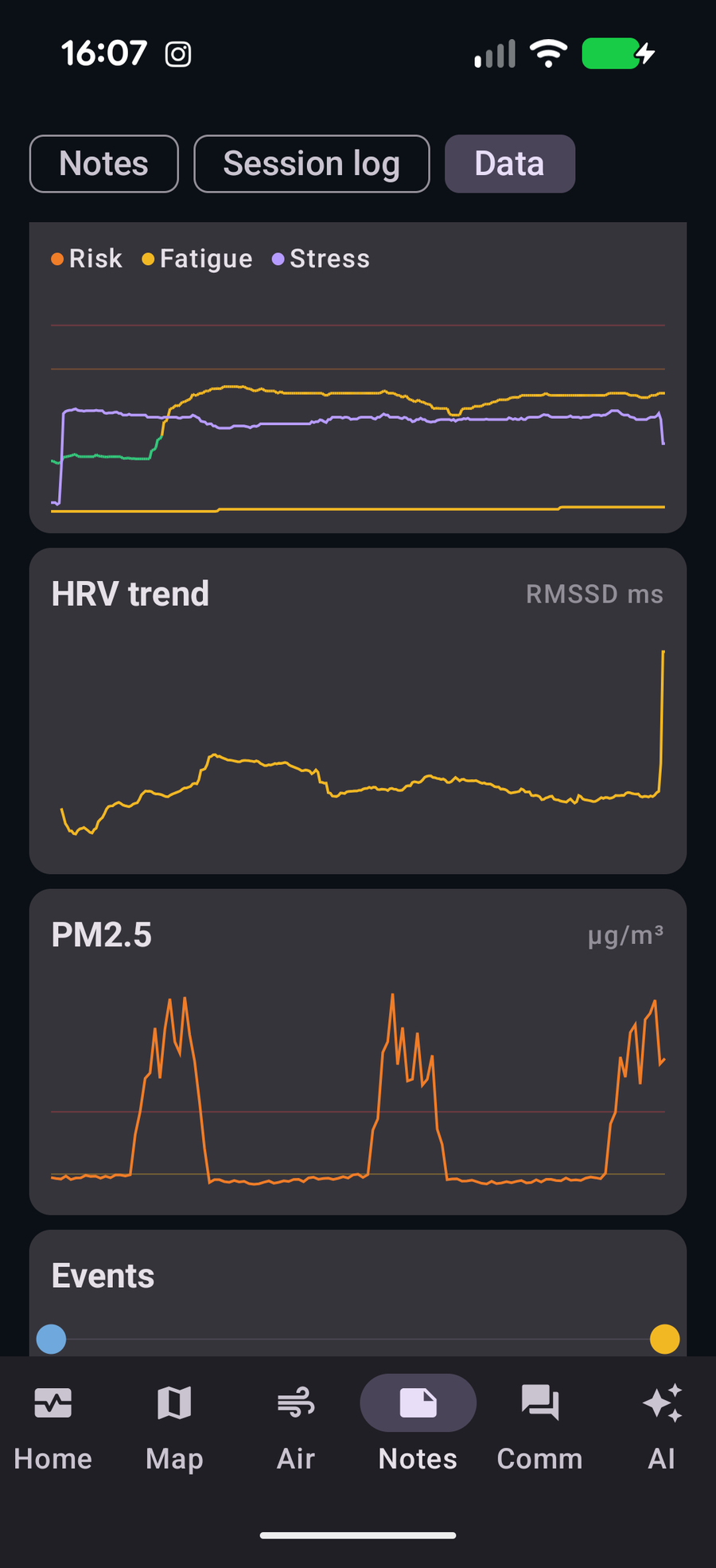
Responder Biometrics & Rehab
Fatigue and physical risk read in real time from a research-grade sensor, with NFPA 1584 rehab and recovery trending — so a responder gets rotated before exhaustion becomes an injury.
See how it works ↗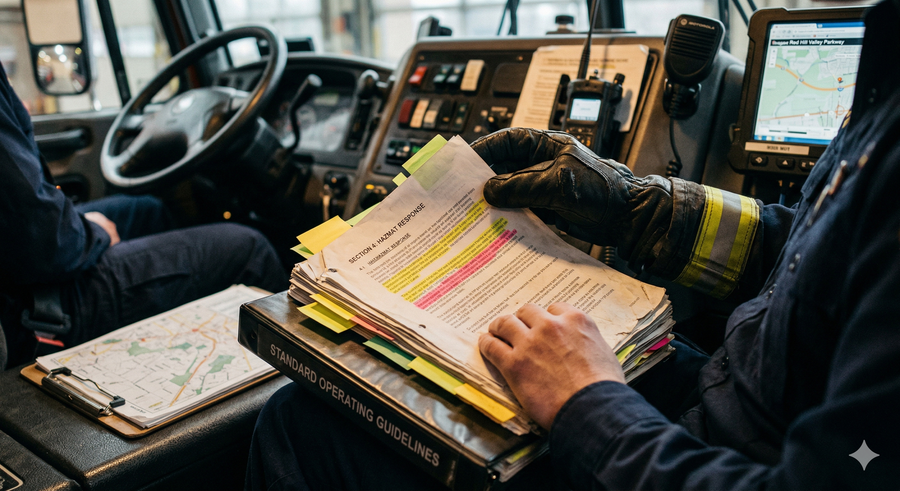
Resource Intelligence
People, credentials, training, vehicles and equipment in one place — with expiry alerts and maintenance and inspection schedules that pull a unit out of service before it fails, plus the mutual-aid agreements you depend on.
See how it works ↗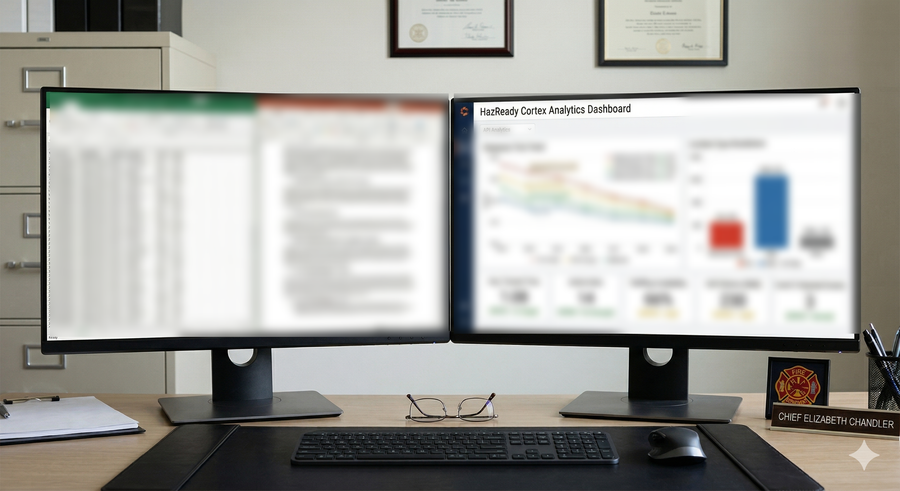
IoT, Drones & Robots
Drones, ground robots, cameras and sensors appear as live presences on the same map as your responders — and the images they send arrive already assessed for severity and damage.
See how it works ↗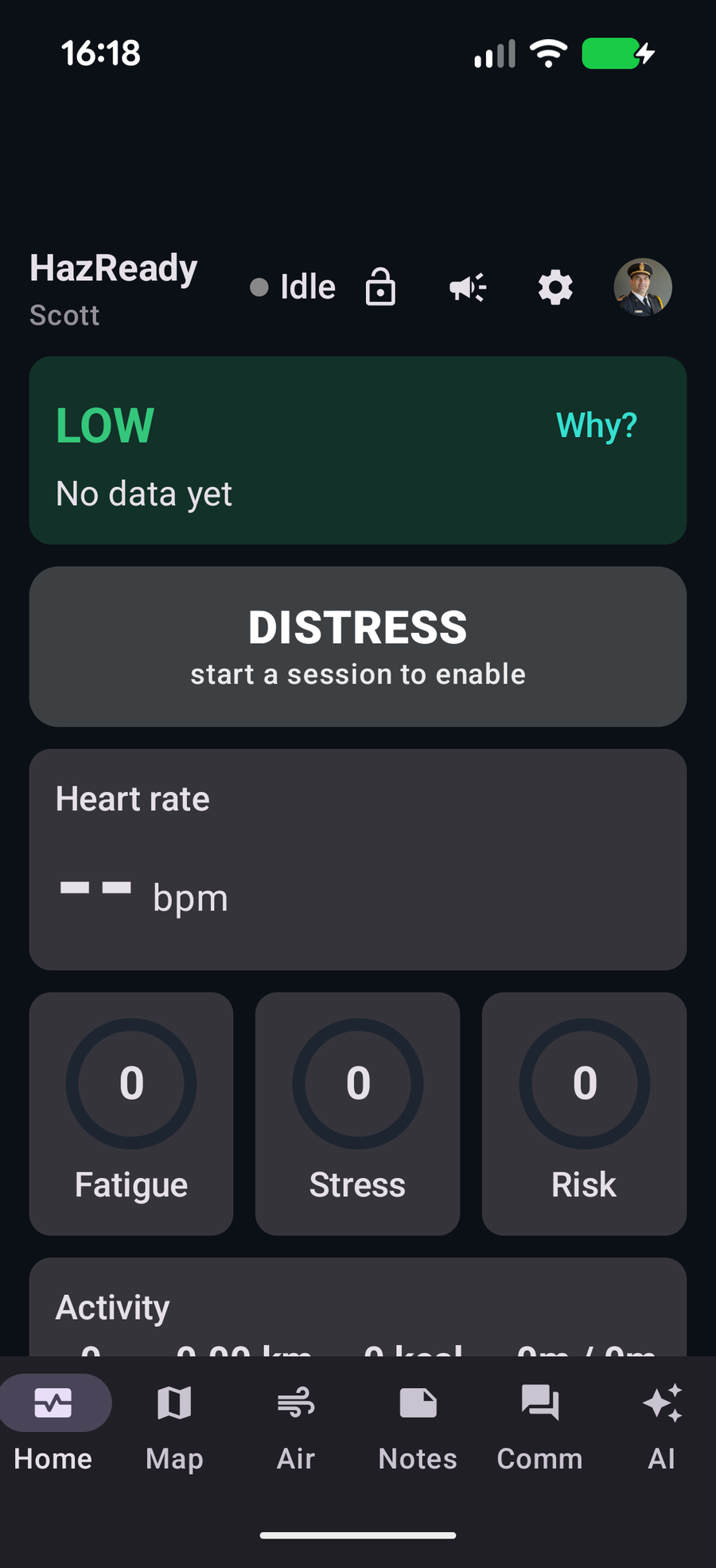
Phone & Tablet Apps
A responder phone app built for gloves, sun and stress, and a command tablet that goes from dispatch to a running incident in under thirty seconds. Both keep working when the network does not.
See how it works ↗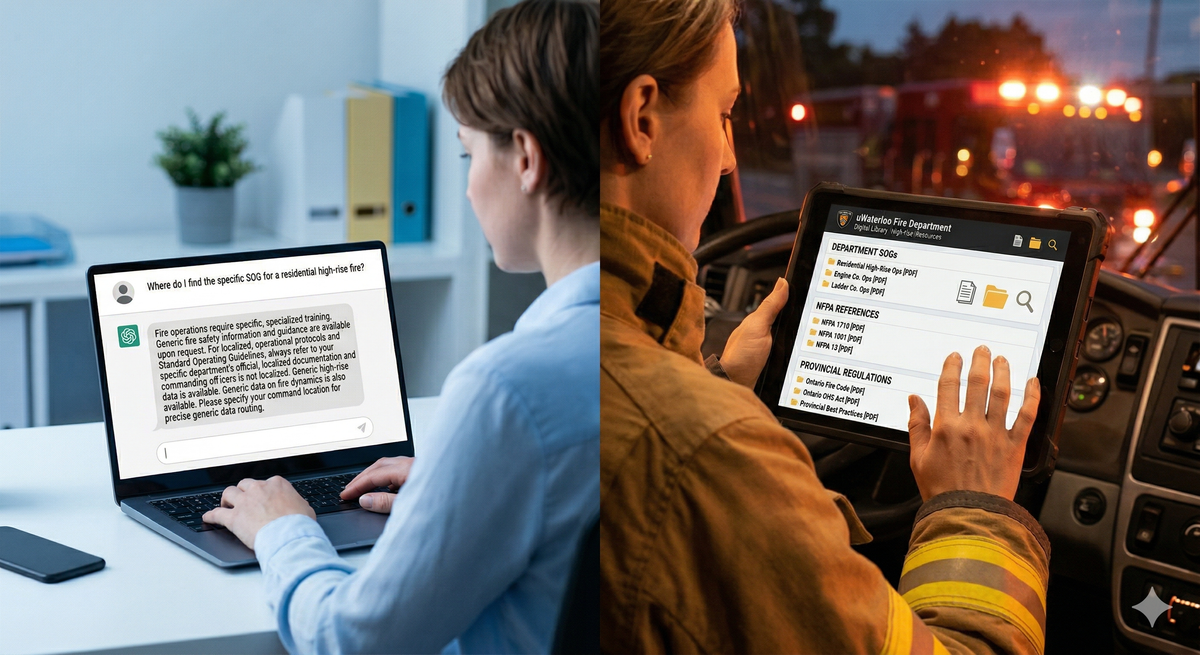
SYNAPSE INTELLIGENCE
An AI that is local, context-aware and sovereign
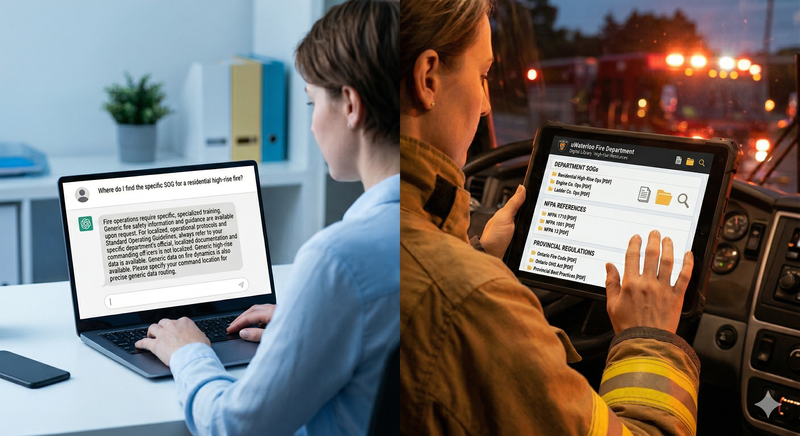
Generic AI does not know your mutual aid agreements, your bylaws, your hazard profile or your SOGs — so it guesses. Synapse answers from your agency's own documents first, then your local service context, then general emergency management knowledge. Every answer shows its sources and how confident it is, so it holds up in an after-action review. Your data stays in your tenancy, and sensitive workloads can run on infrastructure you control.
HOW IT WORKS
From standing start to operational in weeks, not budget cycles
Establish your jurisdiction
Set your service area and let Geographic Intelligence Scan discover the critical infrastructure, facilities and exposure in your boundary with real coordinates.
Bring in what you already have
Upload your existing plans, SOGs, rosters and spreadsheets. AI Data Import maps them into structured records and embeds your documents into your own reference library.
Build the picture
Complete your HIRA, register critical infrastructure and interdependencies, and let Synapse draft the plans and exercise packages that follow from your actual risk profile.
Run the incident
Every responder, sensor, drone and robot on one live picture. Command sees who is on scene, what they hold and how they are holding up; the EOC and the field see the same truth. HazReady supports every decision with sourced guidance — your commanders make the call.
Learn from it
The event log becomes the after-action review automatically — what happened, when, who and what, human and machine — and feeds the next revision of the plan.
WHO IT IS FOR
One platform, many mandates

Emergency Management
Community emergency plans, HIRA, exercise programs and multi-agency coordination for municipal and regional EM offices.
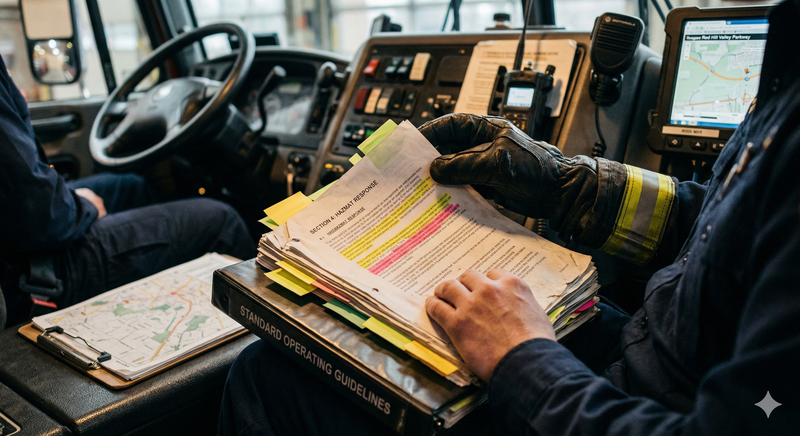
Fire Services
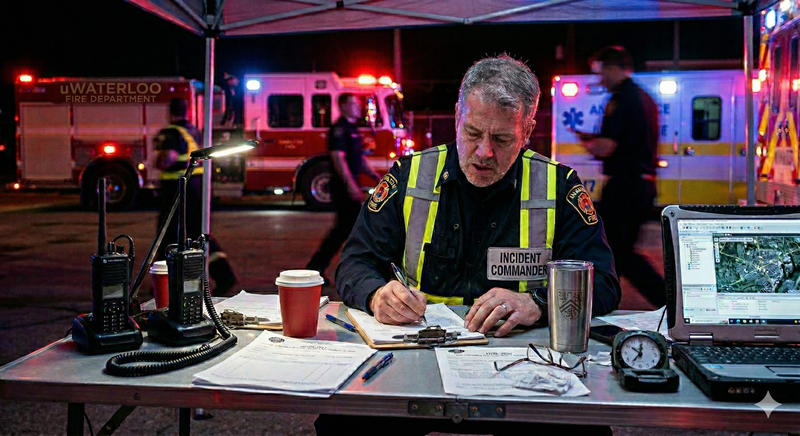
Career, composite and volunteer. Pre-plans, SOGs, HazMat response, accountability and incident command.
Health & EHS
Hospital emergency operations, continuity planning, occupational health programs and regulatory compliance documentation.
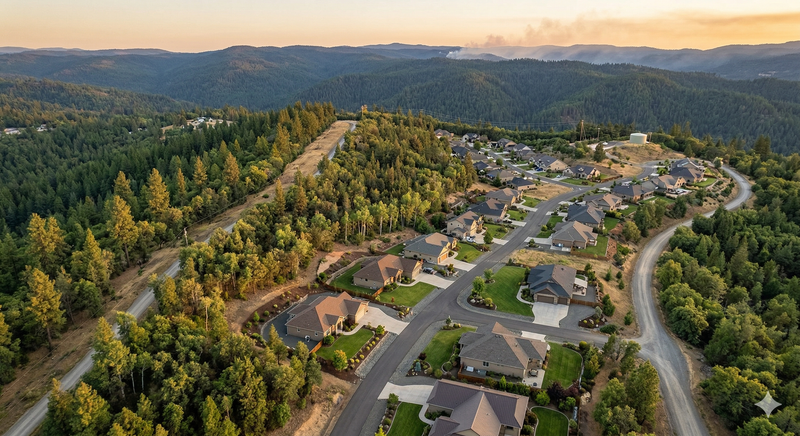
Search & Rescue
Search planning, operational briefings, task assignment and after-action reporting for ground and inland water SAR.
Regional Coordination
County and regional offices aggregating risk and resource data across member agencies through EM Networks.
Corporate Resilience
Business continuity, crisis management, ICS for industry, and supply chain and regulatory reporting.
FIELD NOTES
Practical guidance from the profession
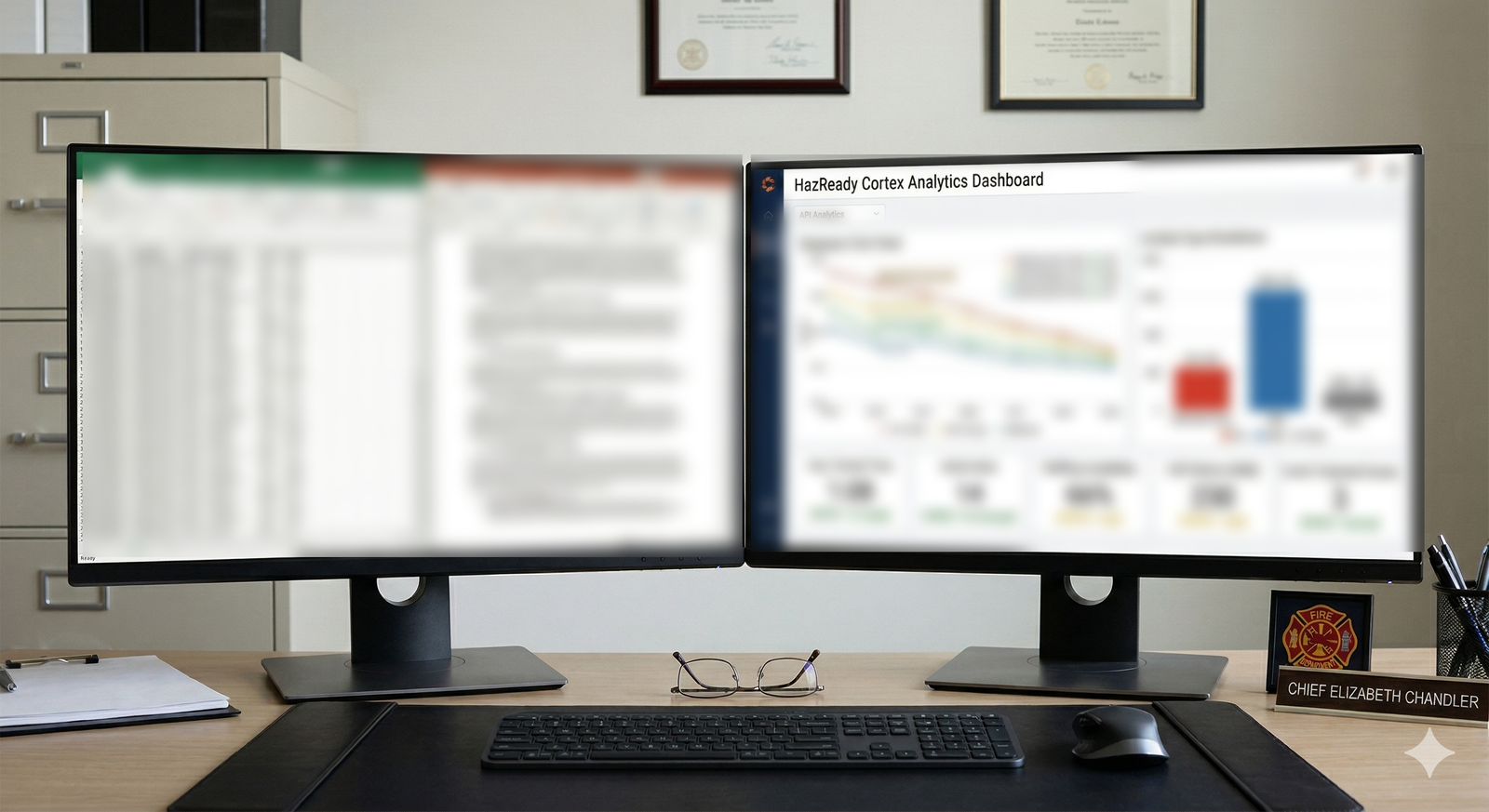
Your Data Is Trapped in Spreadsheets and PDFs. Get Instant Insights.
Turn spreadsheet data into interactive dashboards for budgets, training compliance, and operational metrics. No BI tools or consultants required.
Read more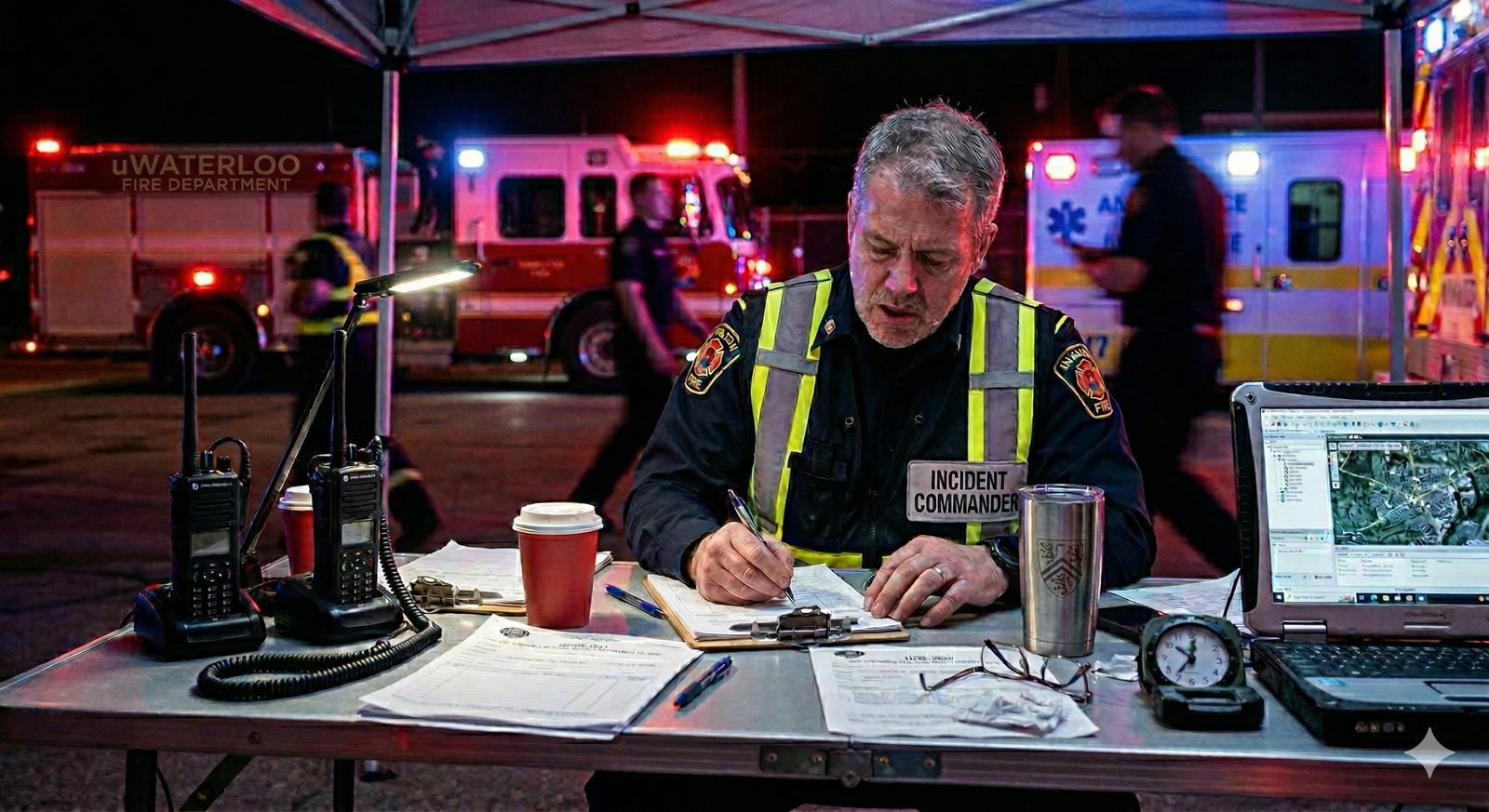
Your Incident Briefing Took Three Hours. It Should Have Taken 30 Minutes.
Generate incident briefings, training plans, SOGs, and reports in structured, document-ready format with guided workflows. 15+ document types.
Read more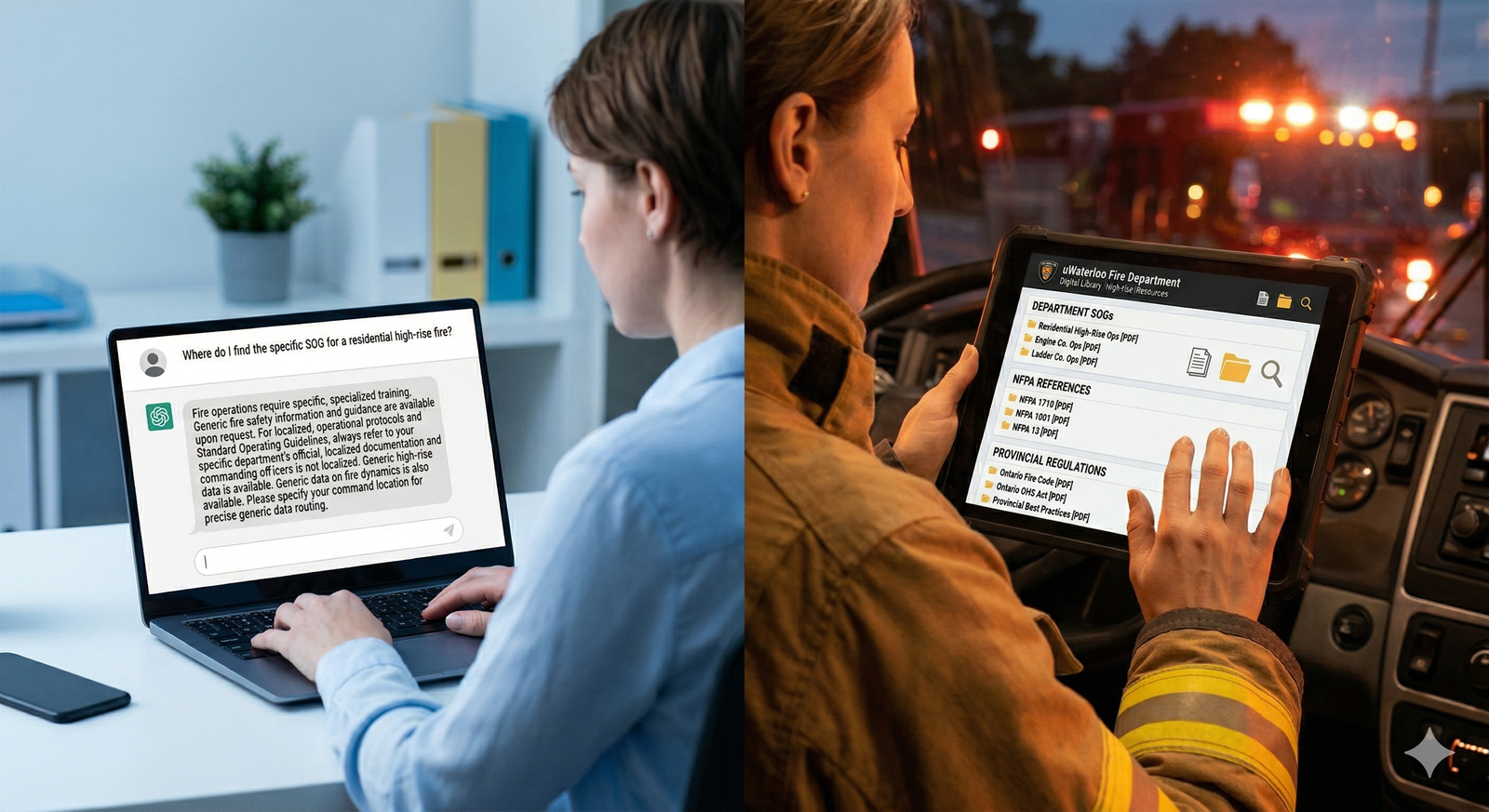
When Generic AI Meets Your Real Policies and Standards
Fire agency AI grounded in your policies, equipment, and provincial standards, with every answer showing its sources so an officer can verify before acting.
Read moreGET STARTED
Readiness is decided before the season starts, not during it
The honest question is not whether your plan exists. It is whether your plan, your risk data and your people can act together on the day it matters. Let us show you what that looks like with your own jurisdiction loaded.