Your Incident Briefing Took Three Hours. It Should Have Taken 30 Minutes.
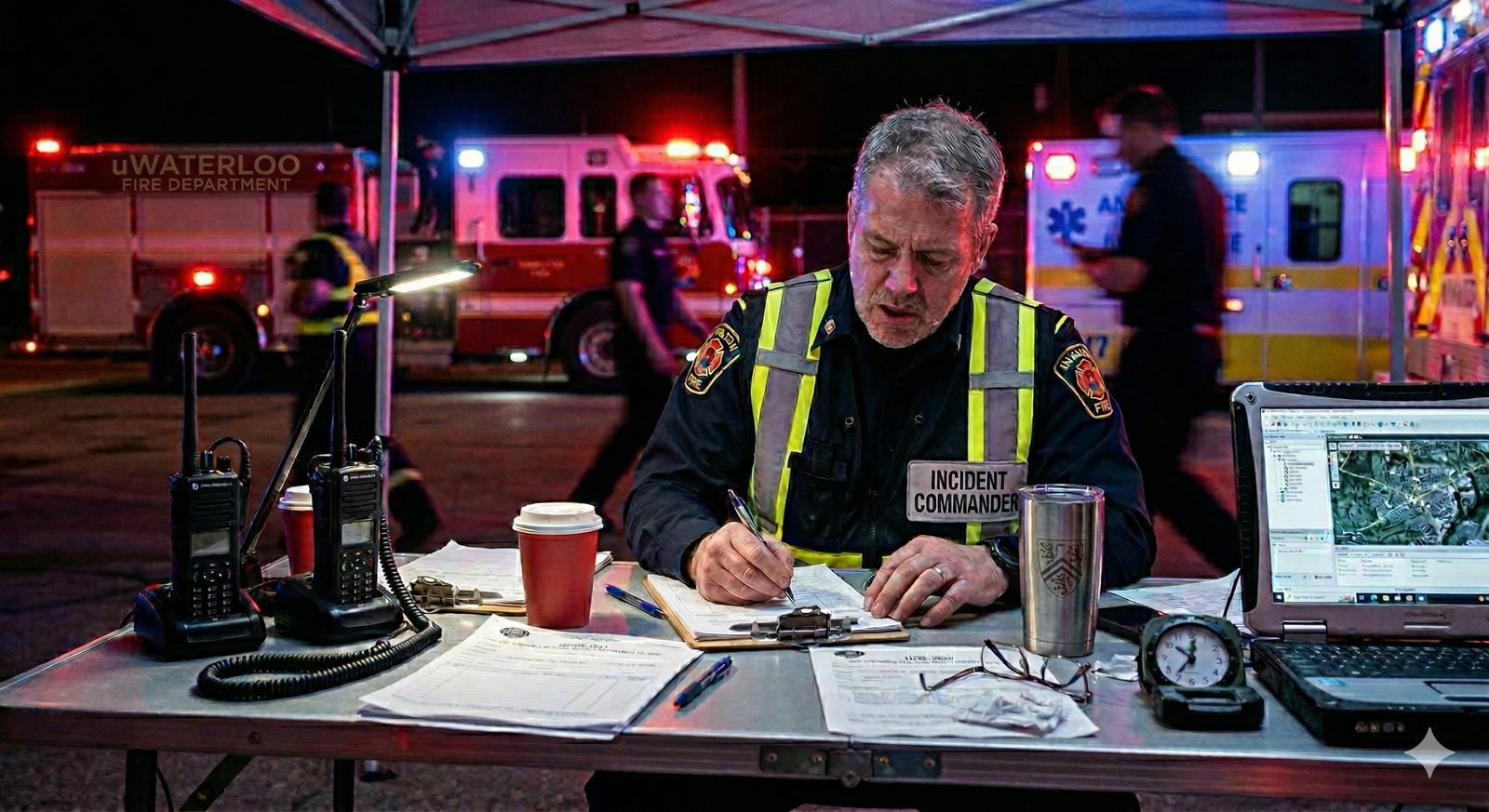
Incident briefings, training plans, SOG revisions, procurement requests, media statements, after-action reports. Every one of these documents is high-stakes and repetitive. A battalion chief spends two hours after an incident crafting a briefing that has to be accurate, complete, follow ICS format, and communicate clearly to council or the regional authority. A fire chief spends a Saturday writing a SOG that covers hazard assessment, procedures, personnel requirements, and equipment. An emergency manager drafts a quarterly training plan that ties training to response competencies and accreditation requirements.
These documents are critical. They're also predictable. They follow patterns. They require the same information every time, just organized differently depending on the document type. The time spent isn't creating insight. It's formatting and organizing information you already know.
Why Existing Approaches Fall Short
Writing these documents from scratch is slow and repetitive. Templates help, but they're often generic and require heavy customization. Nobody has the time. Most agencies have one person who's "good at writing" and ends up doing this work on top of their actual job. When that person is unavailable, documents either don't get written or they get written poorly. Knowledge about how to structure these documents, what information matters, and what format is expected walks out the door when that person retires.
The CAFC Census data tells us that 30% of Canadian firefighters are over the age of 50. That institutional knowledge about documentation standards, report formatting, and regulatory language is at risk of disappearing as experienced personnel leave the service.
What It Looks Like in Practice
It's Thursday afternoon, and a fire chief needs to write a post-incident briefing for a significant medical event that happened that morning. Instead of opening a blank document, she logs into HazReady and selects "Post-Incident Briefing" from the document generation menu. The system asks a structured set of questions: date, time, location, units involved, incident type, command structure, key decisions, resources deployed, time-to-close, and any complications.
She answers these in about 10 minutes, referencing her incident notes. The system generates a complete, professionally formatted briefing in ICS-aligned format. It's document-ready. She reviews it for accuracy, makes two minor edits, and has a finished briefing in 30 minutes instead of three hours.
Later that week, a training officer is designing a skills-based training plan for a new crew rotation. Instead of manually aligning training to competencies, she selects "Training Plan" and specifies the competency areas: vehicle extrication, rope rescue, hazmat awareness, and leadership. The system generates a structured plan with learning objectives, recommended training hours, evaluation criteria, and timeline.
A procurement officer needs to write a detailed equipment request for council. She provides basic information: equipment type, quantity, purpose, budget impact, maintenance needs, and training requirements. The system generates a council-ready document that includes the business case, specifications, lifecycle cost analysis, and training implications. No more guessing what information she needs to include.
HazReady currently supports 15+ document types including incident briefings, media statements, official reports, training plans, policies, SOGs, after-action reviews, and apparatus procurement requests. Each one follows a guided interview process, or experienced users can bypass the questions and go straight to document generation.
What This Means for Your Agency
For fire chiefs and emergency managers: you get time back. Documents that took three hours now take about 30 minutes, and they're to your standard from the first draft.
For training officers: training plans are automatically aligned with competency frameworks and accreditation requirements.
For procurement and budget planning: your funding requests are consistently formatted, professional, and include the business case that councils need to make informed decisions.
For knowledge retention: when a skilled writer retires, the knowledge about how to structure these documents doesn't leave with them. It lives in your system.
"Document generation isn't about removing professional judgment. It's about removing the parts that are repetitive so you can focus on the parts that matter."
See HazReady on your jurisdiction
Every agency has its own procedures, hazards, and mutual aid picture. The quickest way to tell whether this fits yours is to see it working against your own material rather than a generic demo. Book a walkthrough for your agency.